
The reason dogs bark at certain people is often due to a combination of factors, including fear, territoriality, learned behavior, and their individual perception of the person. Dog barking triggers can range from the way someone looks and smells to their body language and past experiences the dog has had. This comprehensive guide explores the various reasons behind dog selective barking and offers insight into interpreting dog vocalizations.
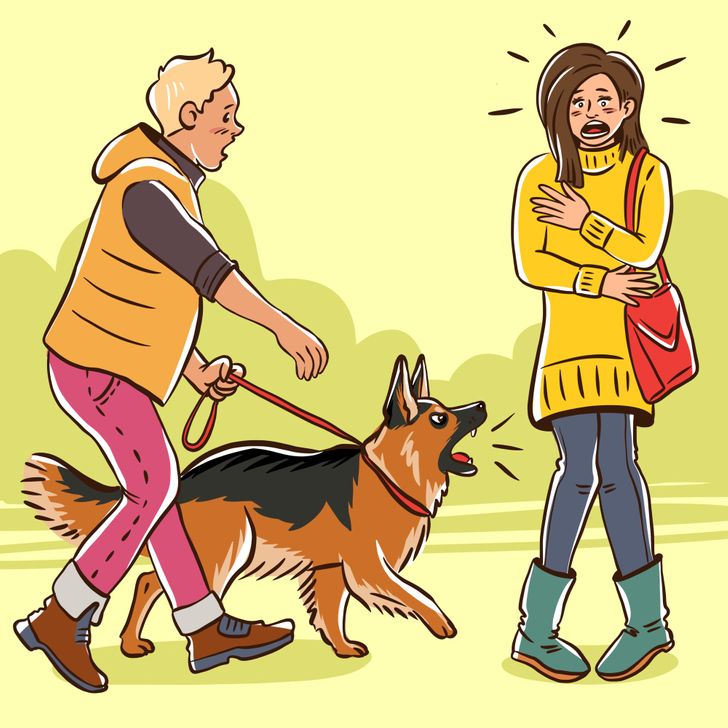
Image Source: wl-brightside.cf.tsp.li
Fathoming Canine Communication: Barking Explained
Barking is a natural form of communication for dogs. It’s how they express a range of emotions, from excitement and playfulness to anxiety and aggression. To truly grasp why a dog barks at specific individuals, we need to look at the different types of barks and the contexts in which they occur.
Types of Barks: A Vocal Repertoire
Dogs don’t just have one type of bark. They have a whole range of barks, each with a different meaning. Here’s a breakdown:
- Alert Bark: A sharp, repetitive bark that signals something unusual.
- Fear Bark: A high-pitched, often frantic bark that indicates fear or anxiety.
- Territorial Bark: A deep, booming bark used to defend their space.
- Play Bark: A playful, excited bark often accompanied by tail wags.
- Attention-Seeking Bark: A persistent, often whiny bark used to get attention.
- Frustration Bark: A repetitive bark that may occur when the dog is confined, bored, or can’t reach something it wants.
The context and accompanying body language are crucial when discerning the meaning of a dog’s barks.
Beyond the Woof: Body Language Cues
Barking is just one part of the message. Pay close attention to the dog’s body language, which provides invaluable insight into their emotional state.
| Body Language | Possible Meaning |
|---|---|
| Stiff posture | Alert, potentially aggressive |
| Tail wagging | Can indicate happiness or agitation |
| Ears forward | Alert, curious |
| Ears back | Fearful, submissive |
| Hackles raised | Arousal, fear, or aggression |
| Lip licking | Stress, anxiety |
| Yawning | Stress, anxiety (when not tired) |
| Whale eye (whites of eyes visible) | Anxiousness, fear |
Reasons Dogs Bark at Strangers
There are many reasons why your dog may bark at strangers. It’s important to consider a dog’s background and current environment when figuring out these reasons.
Territoriality: Defending Their Domain
Dogs are naturally territorial animals. They may view their home, yard, or even their owner as their territory and bark at anyone who approaches to warn them away. This is one of the most common reasons dogs bark at strangers. This behavior is deeply ingrained and linked to the dog’s instinct to protect their pack and resources.
Fear: Reacting to the Unknown
Fear is a major motivator for barking. A dog who is scared of strangers, new sounds, or unfamiliar objects may bark as a defensive mechanism. This can be especially true if the dog has had negative experiences in the past. Fear aggression in dogs often manifests as barking, growling, and lunging.
Socialization: The Impact of Early Experiences
Early socialization plays a crucial role in shaping a dog’s behavior. Dogs who are properly socialized as puppies are less likely to be fearful or aggressive towards strangers. Lack of exposure to different people, places, and situations can lead to anxiety and barking later in life.
Breed Predisposition: Genetic Factors
Certain breeds are more prone to barking than others. For example, herding breeds like Border Collies and Australian Shepherds are bred to bark to control livestock, while guard dogs like German Shepherds and Rottweilers are naturally protective and may be more likely to bark at strangers.
Decoding Dog Selective Barking
Dog selective barking, or dog barking at specific individuals, is a perplexing problem for many owners. Why does your dog seem to dislike certain people while being friendly with others?
Dog Perception of People: What Dogs “See”
Dogs perceive the world differently than humans do. Their sense of smell is far superior to ours, and they also have different visual capabilities. Here are some things they might be picking up on:
- Scent: Dogs can detect subtle scents that we can’t even perceive, such as fear, stress, or illness.
- Body Language: Dogs are excellent observers of body language and can pick up on subtle cues that indicate nervousness, hostility, or discomfort.
- Voice Tone: Dogs are sensitive to tone of voice and can distinguish between friendly and threatening tones.
- Appearance: While dogs don’t see the world in the same vibrant colors as we do, they can still distinguish between different physical characteristics.
Dog Barking at Men: Specific Triggers
Some dogs bark specifically at men. Several factors can contribute to this behavior:
- Deeper Voices: Men typically have deeper voices than women, which can be perceived as threatening by some dogs.
- Larger Stature: Men tend to be larger than women, which can be intimidating to smaller or less confident dogs.
- Body Language: Some men may have a more assertive or direct style of interacting, which can be misinterpreted by dogs.
- Negative Experiences: A dog who has had a negative experience with a man in the past may generalize that fear to all men.
Dog Barking at Women: Understanding the Bias
While less common than barking at men, some dogs bark specifically at women. This can be due to:
- Higher-Pitched Voices: A high-pitched voice may trigger a different response in some dogs, sometimes interpreted as anxiousness, causing the dog anxiety as well.
- Clothing and Accessories: Certain clothing items, like hats or scarves, or accessories like large purses, might startle a dog.
- Gait and Movement: The way a woman walks or moves may differ from a man’s gait, which could be unfamiliar or unsettling to the dog.
- Negative Experiences: Similar to barking at men, a past negative encounter with a woman can cause a dog to react fearfully toward other women.
Past Experiences: The Power of Association
Past experiences, both positive and negative, can profoundly impact a dog’s behavior. If a dog has had a bad experience with someone who resembles a particular individual (e.g., someone with a beard, someone wearing a uniform), they may develop a fear or dislike of people with similar characteristics.
Learned Behavior: Accidental Reinforcement
Sometimes, barking at specific people is simply a learned behavior. If a dog barks at someone and the person goes away (e.g., a delivery person), the dog may learn that barking is an effective way to make people leave.
Managing and Modifying Barking Behavior
While barking is a natural behavior, excessive or inappropriate barking can be a problem. Here are some tips for managing and modifying your dog’s barking:
Identifying the Root Cause: The Key to Success
The first step is to identify the underlying cause of the barking. Is it fear, territoriality, attention-seeking, or something else? Once you know the cause, you can tailor your approach accordingly.
Training Techniques: Building a Better Response
- Desensitization and Counter-Conditioning: Gradually exposing your dog to the trigger (e.g., a stranger) in a safe and controlled environment while pairing it with positive reinforcement (e.g., treats, praise) can help change their emotional response.
- “Quiet” Command: Teach your dog a “quiet” command. When they start barking, say “quiet” and reward them with a treat when they stop.
- Redirection: When you see a potential trigger approaching, redirect your dog’s attention to something else, like a toy or a training exercise.
Environmental Management: Reducing Barking Triggers
- Block Visual Access: If your dog barks at people walking by the window, consider covering the window or using window film to block their view.
- Create a Safe Space: Provide your dog with a comfortable and secure den where they can retreat when they feel overwhelmed.
- Reduce Boredom: Make sure your dog gets plenty of exercise and mental stimulation to reduce boredom-related barking.
Professional Help: When to Seek Guidance
If you’re struggling to manage your dog’s barking on your own, consider seeking help from a certified professional dog trainer or a veterinary behaviorist. They can help you identify the underlying cause of the barking and develop a customized training plan.
Case Studies: Real-World Examples of Barking Behavior
Here are a few case studies to illustrate the different reasons behind dog barking at specific people:
- Case Study 1: Rocky, the Fearful Terrier: Rocky, a small terrier mix, barked incessantly at men with beards. After consulting with a behaviorist, it was discovered that Rocky had been accidentally stepped on by a bearded man as a puppy. Through desensitization and counter-conditioning, Rocky gradually learned to associate bearded men with positive experiences, and his barking decreased significantly.
- Case Study 2: Bella, the Territorial Labrador: Bella, a Labrador Retriever, barked at anyone who approached her yard. Her owners installed a fence and blocked her visual access to the street. They also worked on teaching her a “quiet” command and redirecting her attention when she saw someone approaching.
- Case Study 3: Max, the Bored Border Collie: Max, a high-energy Border Collie, barked constantly when left alone. His owners increased his daily exercise and provided him with puzzle toys to keep him mentally stimulated. They also enrolled him in agility classes, which helped him burn off excess energy and reduce his barking.
Interpreting Dog Vocalizations: Beyond Barking
While barking is a primary form of communication for dogs, they also use a variety of other vocalizations, including:
- Growling: Can indicate aggression, fear, or playfulness.
- Whining: Often used to get attention or express anxiety.
- Howling: Can be a form of long-distance communication or a response to certain sounds.
- Yelping: Usually indicates pain or sudden fear.
- Sighing: Can indicate contentment or boredom.
By paying attention to the context and body language accompanying these vocalizations, you can gain a deeper insights.
Frequently Asked Questions (FAQ)
Q: What is fear aggression in dogs?
A: Fear aggression in dogs is a defensive behavior that occurs when a dog feels threatened or scared. It often manifests as barking, growling, snapping, or biting.
Q: Can I stop my dog from barking completely?
A: It’s not realistic or desirable to eliminate barking entirely. Barking is a natural form of communication for dogs. The goal is to manage and modify the barking so that it is appropriate and not excessive.
Q: Who is most likely to be barked at by a dog?
A: There’s no single “most likely” person. Dogs may bark at people based on factors like gender, appearance, body language, scent, or past experiences.
Q: What are some common dog barking triggers?
A: Common dog barking triggers include strangers, other animals, loud noises, visual stimuli (e.g., cars, squirrels), and separation anxiety.
Q: How can I tell if my dog is barking out of fear or aggression?
Tune into a dog’s silent language. A frightened pup might shrink away, clamp their tail tight, or flash the wide whites of their eyes. Conversely, an aggressive dog often stands rigid, with fur bristling along their back and a challenging, unwavering gaze.